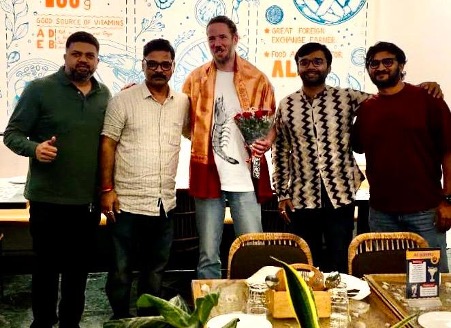
Earlier this month, I had the opportunity to finally visit Gujarat and go to the P. monodon Broodstock Multiplication Center (BMC) and feedmill of the Vaishnavi Group, the shrimp farm of Manoj Sharma, and the processing plant of Mindhola Foods. Of course, I had the great pleasure of enjoying the best shrimp dishes imaginable at Zhingalala. The conversations I had provided me with great insight into the progress that the P. monodon sector in Gujarat and India as a whole is undergoing. Following my visit to Gujarat, I had the privilege of delivering a keynote speech at the India International Seafood Show in New Delhi, where I gained a broader perspective on the state of the Indian black tiger sector. In this blog, I will share my insights, observations, and expectations with you.

India’s Two Pillars of Black Tiger Broodstock and PL Supply
Unima’s Open Partnership Model
Unima supplies P. monodon broodstock from Madagascar through its subsidiary Aquacultura de la Mahajamba (also known as Aqualma), which is registered as an Coastal Aquaculture Authority authorized broodstock supplier to the Indian market.
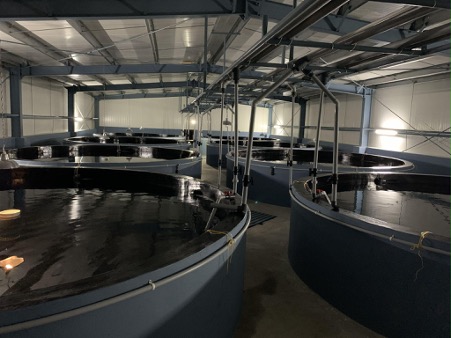
Credit: Unibio Pvt. Ltd.
In India, Unima operates via Unibio Pvt. Ltd., based with it’s hatchery in Tamil Nadu. Unima and Unibio collaborate with a network of 13 partner hatcheries along the East Coast. It’s PL is distibuted throughout India under the Unibio brand, whether produced by Unibio itself, or by one of its partner harcheries.
Among Unima’s partners are some of India’s most prominent hatchery operators such as Golden Marine, BMR Industries, Vaisakhi Bio-Marine, and Sapthagiri. Through these partnerships, Unibio post-larvae (PL) have become widely available to farmers across both coasts.
Unima generates revenue not only through PL sales via Unibio but also from the sale of broodstock and nauplii to its partner hatcheries.
Vaishnavi Aquatech’s Closed Model
Moana Technologies’ exclusive partner in India is Vaishnavi Aquatech, a vertically integrated shrimp producer based in Surat, Gujarat. Unlike Unima, Vaishnavi operates a closed model. The company imports Parent Post-Larvae (PPL) from Moana Technologies in Hawaii and raises them to adult broodstock at its Broodstock Multiplication Center (BMC) in Bharuch, also in Gujarat.

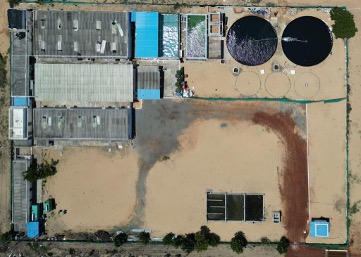
Credit: Vaishnavi Aquatech
From there, the broodstock are supplied to Vaishnavi’s group hatcheries in southern Andhra Pradesh, and the resulting post-larvae are sold both along the East Coast and back to Gujarat on the West Coast. This integrated model allows Vaishnavi Aquatech to control both broodstock production and PL distribution, capturing value across multiple stages of the supply chain and helping to recover its BMC investment.
Once this investment is recovered, it’s likely that also Vaishnavi Aquatech will open its model to third-party hatcheries—a step many industry observers believe will be crucial for long-term scalability and success.
Limited Alternatives
The government-run Rajiv Gandhi Center for Aquaculture (RGCA) continues to operate its P. monodon breeding program in the Andaman Islands. However, its 2024 market entry was unsuccessful, and there have been no commercial supplies from the program in 2025.
At the same time, discussions about permitting Thai suppliers—notably CP Foods—to export P. monodon broodstock to India have not yet materialized. CP’s genetics would be a welcome third option by farmers who hope that with more competition among suppliers, PL prices will come down.
For now, India’s hatcheries and farms depend entirely on Unima and Vaishnavi Aquatech for their P. monodon broodstock supply.

What’s in a Name? Understanding Vaishnavi Aquatech’s Broodstock Multiplication Center
The term Broodstock Multiplication Center (BMC) suggests that broodstock are multiplied within such a facility. However, in India, this is not typically the case. Instead, India’s BMCs receive Parent Post-Larvae (PPL) from their overseas partners and raise them to adult broodstock. These broodstock are then supplied to hatcheries, which use them to produce post-larvae (PL) for farmers.
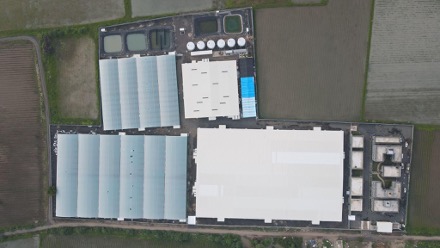
According to Dhaval Contractor of Vaishnavi Aquatech, whose family operates a black tiger BMC in Gujarat in partnership with Moana Technologies of Hawaii, this facility is the largest of its kind in Asia.
Credit: Vaishnavi Aquatech
The primary advantage of having a BMC within India lies in the simplified logistics. Transporting small PPL from remote breeding facilities—such as those in Hawaii—is far less demanding than shipping live adult broodstock. PPL shipments are required only one to three times per year, and due to their small size, they occupy significantly less transport space. Moreover, by rearing PPL under local environmental conditions and selecting the best-performing individuals for distribution, a BMC can help build a more adapted, efficient, and cost-effective breeding ecosystem. In theory, these locally raised broodstock could also be more economical than directly imported adults, given the lower logistical costs associated with them.
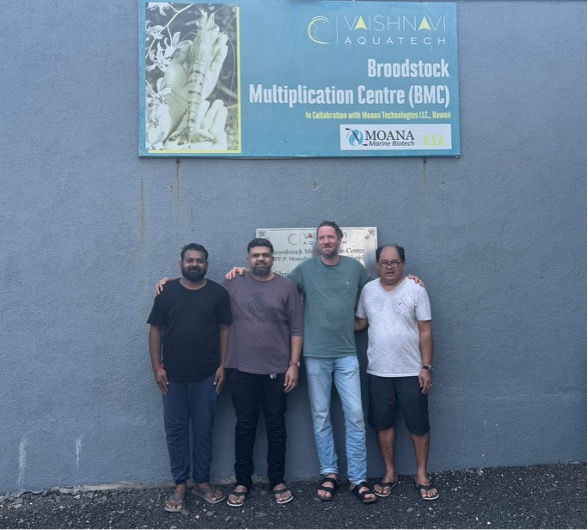
During my visit to Vaishnavi Aquatech’s BMC in Bharuch, Dhaval Contractor proudly guided me through the facility, located about four to five hours from Surat, Gujarat’s main commercial hub. The center is well-designed, equipped with advanced water treatment and filtration systems, and operates a five-stage partial indoor grow-out process. After the seawater is treated, PPL are gradually transferred through each stage, with conditions optimized for every growth phase.
At the time of my visit, the management team reported that 19,000 breeders were being reared for distribution to hatcheries in Andhra Pradesh ahead of the February 2026 stocking season.

Performance Traits of the Two Genetic Sources
Dr. Ramraj, a consultant engaged in Unibio’s program, claims that both SPF P. monodon genetics available in India grow at least 30% faster than the wild-spawned PL that farmers depended on earlier. He also notes that the two SPF genetics are distinctly different, as these programs were developed independently based on other genetic sources and selection approaches. This is different from most SPF L. vannamei programs, which almost all originated from a single source. He also notes that, unlike L. vannamei, the performance of both SPF P. monodon genetics are very sensitive to stocking densities and therefore, farming strategies should be fine-tuned to the specific genetics.
Looking at the differences in the performance of the two SPF genetics, while Unibio’s post-larvae (PL) are generally regarded as more robust than those of Vaishnavi Aquatech, farmers acknowledge that Unibio’s lines grow more slowly. Under typical conditions—at a stocking density of 15–20 PL/m²—Vaishnavi’s PL can reach 50 grams in about 120–130 days, whereas Unibio’s PL require roughly 160–170 days to achieve the same size. The difference in survival rates between the two is estimated at 5–10%, favoring Unibio.
Overall, Dr Ramroj notes that farmers who shift back to P. monodon benefit from investments they made in bio-security of their farms when they moved from wild-spawned P. monodon to SPF L. vannamei. Improved biosecurity leads to lower mortality and crop failure. Dr. Ramraj also claims that overall P. monodon is more refractory to a disease known as EHP, one of the largets challenges for L. vannamei in India, and is at current densities also less affected by White Faeces, another major challenge affecting the success of L. vannamei farmers. As such, besides the current price scenario, SPF P. monodon is a welcome alternative from a performance perspective.
PL Market Size and Market Share
In 2025, Unima, Unibio, and its partner hatcheries report sales of approximately 1.5 billion PL, while Vaishnavi Aquatech sold around 800 million PL, bringing the total net market size for P. monodon PL to about 2.3 billion. Including an average “bonus” of 20%—the additional larvae supplied by hatcheries to compensate for expected mortality during or shortly after stocking—the gross market size is estimated at 2.7–2.8 billion PL.
With these figures, Unima, Unibio, and its partner hatcheries currently hold an estimated 70% market share. Unima's collaboration with some of the largest hatchery operators has definitely helped the company expand its market share. It remains to be seen whether this dominance will last. In 2024, Vaishnavi faced quality issues—primarily lower survival rates—which led many farmers to switch to Unibio’s PL in 2025. Yet, early reports indicate that Vaishnavi’s 2025 batches have performed much better, potentially boosting demand for its PL in 2026.
The genetic and performance differences between these two PL sources also shape distinct farming strategies—a topic explored in the following section.
Farming Cycles and Target Sizes
P. monodon shrimp grow more slowly than L. vannamei, but they are typically easier to raise to larger sizes—sizes that L. vannamei rarely reaches efficiently.

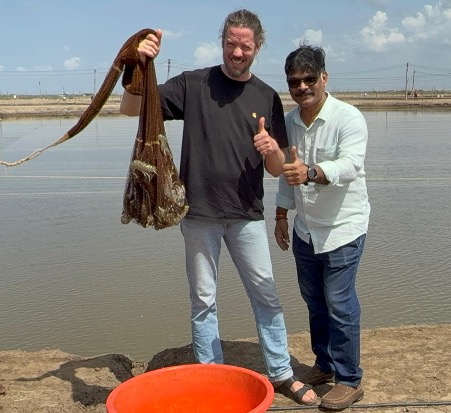
When Indian farmers first gained access to SPF P. monodon PL, most opted for a single annual crop. They typically stocked ponds at 10–25 shrimp per square meter in late February or early March and raised them to 20–30 counts per kilogram. While a few farmers harvested at that stage, most continued to grow the remaining biomass to under 15 count.
With Vaishnavi Aquatech’s PL, a 20-count shrimp yield was reached after about 120–130 days. Using Vaishnavi’s PL, achieving 15 counts required roughly an additional 30 days, and 10 counts another 30 days, resulting in a 150–180-day culture cycle. Early harvests began around July, with the largest shrimp coming to market in September and October.
As farmers gain experience with different genetic lines and a clearer understanding of market preferences, farming and harvesting strategies are evolving.
Farmers using Unibio’s genetics, which offer higher survivability but slower growth, typically target 30 count shrimp at a stocking density of 20-30 PL/m2 (not much lower than farmers would do for L. vannamei in most locations. This size would be reached in approximately 120 days, allowing farmers in favorable locations (especially in Andhra Pradesh) to stock two crops per year: the first from February to June, and the second from July to November.
Farmers using Vaishnavi Aquatech’s genetics, known for faster growth, continue to focus on producing larger shrimp. However, while earlier stocking at around 15 PL/m2, some are adopting a hybrid strategy—starting with higher stocking densities, conducting a partial harvest at 20–30 counts per kilogram, and then growing the remaining biomass to U15, all within a single production cycle.
Based on these evolving approaches, 20–30 count shrimp are now mainly available from July to August, with additional supply appearing in November as more farmers stock a second crop. The largest sizes, produced using Vaishnavi’s PL, reach the market primarily between end of September and mid-November.
Export Market Development
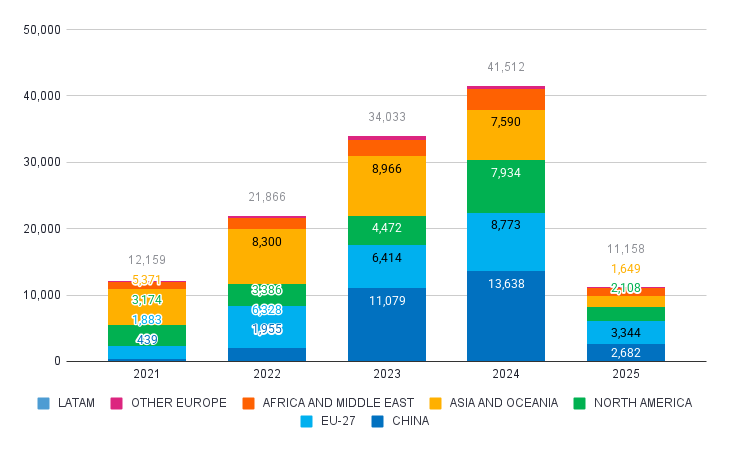
Source: Ministry of Commerce

According to Exim data, approximately 10% of India’s P. monodon exports originate from West Bengal, reflecting the extensive farming systems in the Sundarbans region. Exports from Maharashtra and Gujarat together account for 42–43% of the total, while the East Coast—covering ports in Odisha, Andhra Pradesh, and Chennai (Tamil Nadu)—contributes 45–56%. The remainder is shipped from Kochi and southern Tamil Nadu. These figures indicate that both Andhra Pradesh and Gujarat were responsible for roughly 18,000 MT of black tiger shrimp exports in 2024, highlighting their equal importance in India’s production landscape.
When looking at destination markets, it becomes clear which regions have driven India’s recent growth. Initially, most of the black tiger shrimp from extensive systems were exported to Japan. However, once production began to surge, the EU and the US absorbed much of the initial increase. Between 2022 and 2024, China emerged as a key buyer, alongside the US, taking up a growing share of India’s expanding output.
Credit: Vaishanvi Aquatech
For Indian exporters, the Chinese market is especially attractive due to favorable payment terms. Buyers often provide a prepayment when contracts are signed and settle the balance in cash against documents. This arrangement benefits producers—particularly in Gujarat, where most exporters are also farmers—allowing them to recover production costs more quickly and improve profitability.
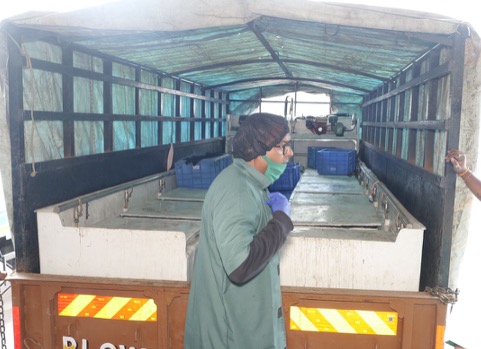
The strong demand from China has also encouraged investments in live-harvesting infrastructure and brine-freezing technology to serve this market better. These investments may have a spillover effect on L. vannamei farmers as exporters are urgently looking to diversify their markets. Premium prices for live-harvested products reportedly already range between INR 5-15 per kg. This premium is expected to grow further as a larger premium market is developed. One of the companies leading this effort is Abad Overseas, which, with its JV partner Nueva Pescanova, has already built a market for live harvested premium L. vannamei and P. monodon in Southern Europe and China.
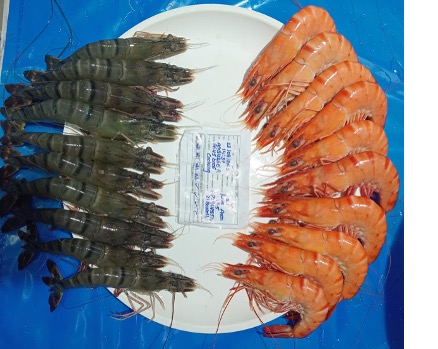
Credit: Unibio Pvt. Ltd. and Vaishnavi Aquatech
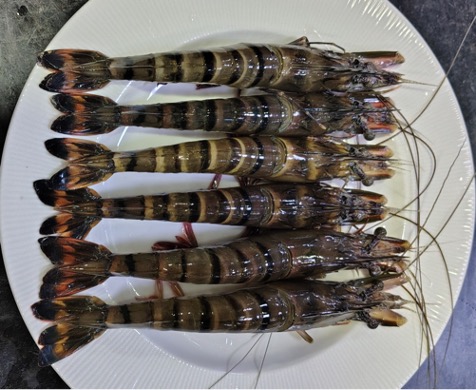
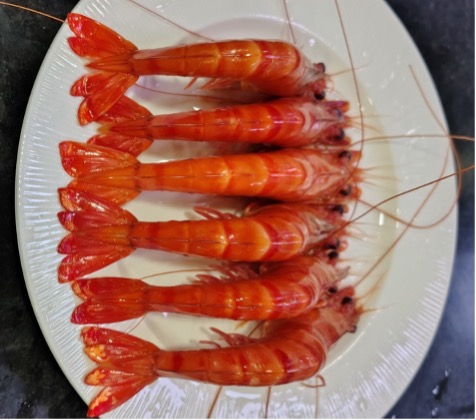

At the same time, Indian exporters recognize the risk of overdependence on China and have been actively exploring opportunities in the EU, the US, and other Asian markets. With the US market still constrained by high tariffs, efforts to diversify into the EU and other Asian markets are expected to intensify, leading to increased competition with suppliers from countries such as Bangladesh. To succeed, India’s producers will need to align product offerings with market-specific size preferences—mainly 16–30 counts for China, the US, and the EU, and larger counts primarily for China. Besides, for the EU retail market, farmers will have to be ASC certified.
2025’s Crop Status
India’s black tiger shrimp exports during the first half of 2025 were almost 40% behind the same period in previous years (see Graph 1), mainly due to delayed stocking. According to Vaishnavi Aquatech, farmers began stocking roughly a month later than usual this year, which in turn postponed harvests—a trend clearly reflected in the export figures.
From July onwards, however, shipments began to recover. This rebound is visible in the official export data published by India’s Ministry of Commerce for July, where exports increased by almost 90% year over year. It is further supported by Exim database figures indicating strong year-over-year growth in August and September. By the end of 2025, exports are expected to match or slightly surpass 2024 levels, reaching around 42,000–45,000 MT.
With production and exports gathering momentum, the real black tiger boom may just be on the horizon—a development explored further in the final section of this report.
Gujarati Tiger: The Best Large Black Tiger Shrimp in the World?
Farmers in Gujarat are in a unique position. Looking at the characteristics of their industry, they could rightfully claim to produce some of the best large black tiger shrimp in the world. Why? Let me explain.
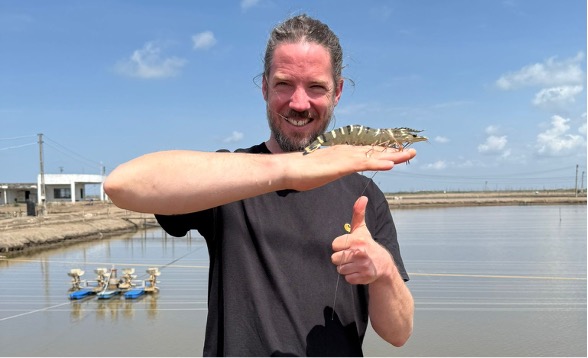
Shrimp farming in Gujarat is concentrated in four districts in southern Gujarat, just a few hours’ drive from Mumbai. Surat serves as the commercial headquarters of the industry, home to most of the larger companies. The other central farming districts are Navsari and, to a lesser extent, Valsad and Bharuch. The total land under cultivation in these four districts amounts to around 4,000 ha.
Due to the regional climate, farmers in Gujarat can typically only produce one crop per year—from March to October or, at the latest, November. This makes it ideal for growing a single cycle of large-sized P. monodon, typically reaching a U15 count in five to six months. The result is a unique product—renowned for both its impressive size and striking appearance. Few other origins can match Gujarat’s combination of size, quality, and consistency.
Thanks to favorable tidal conditions that carry 20km upstream, Gujarat’s farmers enjoy relatively clean water with low Vibrio loads. As a result, they are less inclined to rely on chemicals or pharmaceuticals when faced with disease risks. Farmers proudly state that their shrimp are raised entirely without antibiotics. Stocking densities are typically low, ranging from 10 to 25 PL/m², in relatively large ponds of 0.5 to 1 hectare. It’s no exaggeration to say that Gujarat’s black tiger shrimp are the “free-range chickens” of the shrimp world. Farmers are skilled in their craft, applying responsible practices and high-quality feeds to achieve optimal results.
Production volumes remain modest at around 25,000 metric tons annually but could grow to 40,000 metric tons in the future. One of the most distinctive features of Gujarat’s black tiger shrimp sector compared to other Asian origins is its high level of consolidation. The top ten farmer groups—each operating their own farms, leasing others, and working closely with satellite farmers—collectively control about 80–90% of total production. Each group manages approximately 400–600 hectares, producing between 1,600 and 2,400 metric tons of crops per year. The short, well-coordinated supply chains in Gujarat ensure consistent quality and strong traceability.
Several of the farmer groups have evolved into exporters themselves. Notable examples include Zeal Aqua, Mindhola Foods, Tandels, and, more recently, Vaishnavi Aquatech. The latter stands out as India’s only fully integrated black tiger company, owning its own broodstock multiplication center (BMC), hatcheries, feed mill, and farms, and operating as a merchant exporter. For many of these companies, exporting is not only a means to generate revenue but also a strategic way to learn directly from the market what is required to position Gujarat as a preferred origin for premium, large black tiger shrimp.
With such a consolidated and forward-looking group of companies leading the way, Gujarat’s farmers have a real opportunity to join forces and collectively promote their product as what it truly is—the best large black tiger shrimp in the world.

What to expect next
Stakeholders have mixed expectations about the pace of India’s P. monodon revival. Some foresee a gradual expansion over the next few years, with production and exports reaching around 75,000–100,000 MT within three to five years. Others are more optimistic and believe growth could accelerate faster.
A significant trend highlighted by Ravi Kumar Yellanki of Vaisakhi Bio-Marine, one of Unima’s partners and a top 3 hatchery player, is the expected move of P. monodon farming into lower-salinity areas starting next year. So far, stocking has been limited primarily to farms located directly on the coast and in the tidal creek areas along the East Coast, as well as in Gujarat and a few pockets on the West Coast. Expansion into the inland zones of central and northern Andhra Pradesh would mark a significant shift, potentially involving a much larger number of farmers. Dr. Ramraj echoes that Unibio’s PL has proven to perform well in low salinity areas of 5 ppt in Nellore (Andhra Pradesh) to 45 ppt in Prakasam (Andhra Pradesh) and Gujarat—opening the door for wider expansion.
Another driver of growth is the evolving farming strategies. Farmers using Unibio’s PL increasingly opt for two shorter crops instead of a single long one, while those working with Vaishnavi Aquatech’s PL are experimenting with higher stocking densities and partial harvesting. Further expansion may also come from regions like West Bengal and Odisha, where many farmers have yet to seize the opportunity to switch to P. monodon.
Ultimately, the extent of a broader shift back to P. monodon will depend not only on biological and economic performance but also on market dynamics. Suppose India and the United States manage to reach a trade agreement that reduces tariffs from the current 50% to around 25%. In that case, many farmers—especially in Andhra Pradesh—may stick with L. vannamei. However, if the current trade situation persists, they will likely explore alternatives, and P. monodon could become one of the most attractive options.
That said, rapid expansion without corresponding market development could quickly lead to overproduction. Strategic coordination across the industry will therefore be crucial. India’s P. monodon revival must go hand in hand with efforts to diversify markets and actively promote the distinctive qualities of Indian-origin black tiger shrimp.